In the 1970s, there was a television show called The Six Million Dollar Man. A man is nearly destroyed, then rebuilt. Faster. Stronger. Better. At the time, six million dollars felt unimaginable, and the idea that a human body could be reconstructed so completely belonged to science fiction.
Today, that money does not buy bionic limbs. But it can buy something closer than most people are comfortable admitting. And for some, the real question is no longer whether the body can be rebuilt, but how far that rebuilding can go.
Meet Hugo and Oksana Ramirez
If someone arrived in Miami and tried to assemble a couple entirely from television stereotypes and Instagram fantasy, they would likely land somewhere near Hugo and Oksana Ramirez.

Hugo dresses almost entirely in white. Oksana lives in color, mostly pink. Bleach-blonde hair, oversized sunglasses, platform heels tall enough to feel architectural. Together, they move through the city like two people who understand exactly where they are and lean into it.
Oksana is a global luxury travel and fashion influencer with more than three million followers (Instagram: @oksanapink). She is photographed worldwide and welcomed into fashion’s most exclusive spaces. Hugo owns a Houston-based firm that works with attorneys on distressed-asset acquisitions and travels constantly for work. Their life is fast, mobile, and intentionally designed.
They have both taken self-construction into their own hands. Hugo has taken it further than most.
When Cosmetic Surgery Becomes Engineering
Cosmetic procedures no longer shock anyone. Botox, implants, tummy tucks, facelifts, fat transfers. What was once whispered about is now openly discussed and casually scheduled. Culture caught up. The shock wore off.
But leg-lengthening still gives people pause.
Hugo stepped directly into it.
Before his legs, there was his nose, his jaw, a mini facelift, eyelid surgery, lens replacement in his eyes, and extensive body sculpting. Every change was deliberate. Every decision intentional. Then came the legs, and the scale shifted entirely.
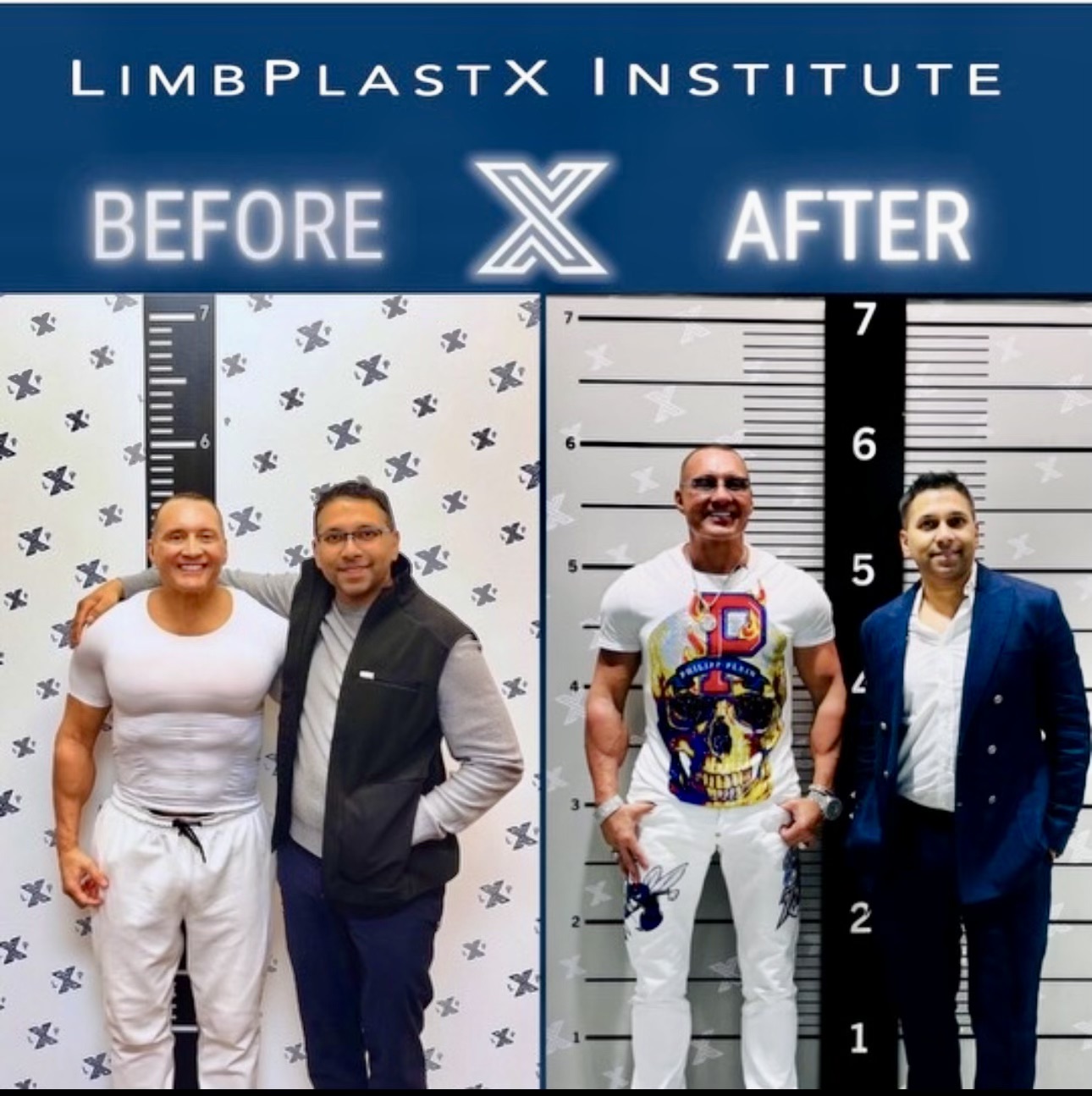
Hugo underwent cosmetic leg-lengthening surgery in Las Vegas. Surgeons cut the bone, insert titanium magnetic rods, and slowly lengthen the legs millimeter by millimeter over months.
Asked why, Hugo is blunt.
“I’m not average. I don’t like to be average.”
The Prerequisites
Even before surgery, the process demanded control. The internal rods could only support a limited load during healing. At 235 pounds, Hugo was too heavy. He dieted aggressively, dropping more than twenty pounds. Still not enough.
So he made another decision.
He underwent gastric sleeve surgery so his body would meet the mechanical requirements of the leg-lengthening process. This was not about lifestyle weight loss. It was a prerequisite. Once his weight dropped below 200 pounds, the surgery moved forward.
The Recovery
Recovery was slow and painful. Relearning how to walk was the hardest part. Two weeks before the three-month healing period ended, Hugo stepped from a dock onto a yacht and put all his weight on one leg. The titanium rod inside his femur bent. He returned to Las Vegas for another surgery.
The surgeon explained it calmly. As the bone is slowly separated, the body responds by generating new bone tissue in the gap. Each adjustment triggers more healing. The cycle continues until the gap fills in. The bone hardens and becomes longer.
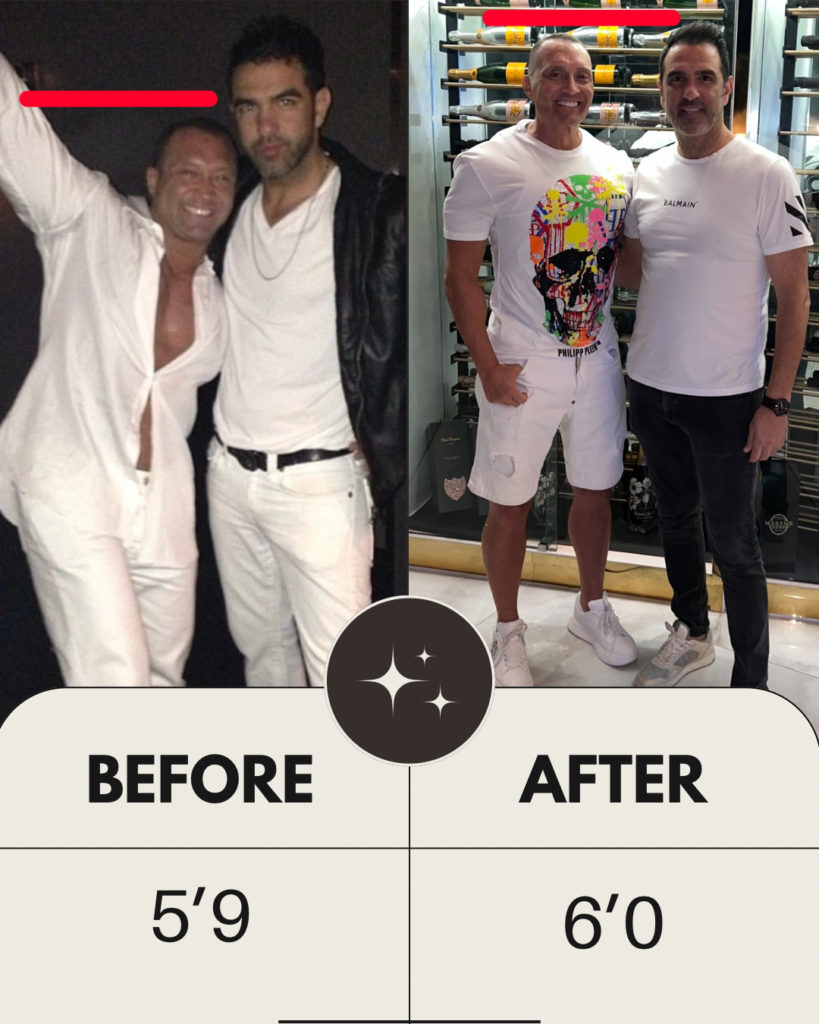
The cost was mentioned almost casually. Around eighty-five thousand dollars, not including extended recovery stays or a year of physical therapy. Hugo estimates he is close to one hundred fifty thousand dollars in.
And he plans to do it again.
His target height is six foot three. He is waiting for a new generation of rods designed to support more weight, making the next procedure easier. Once they are available, he intends to proceed.
Building The Rock’s Jawline
His jaw followed the same logic. Hugo traveled to Beverly Hills for a custom jaw implant. He arrived with a photo of Dwayne “The Rock” Johnson.
Build this.


The result was a one-piece implant designed to replicate that jawline. Not inspired by it. Matched to it.
At some point, this stops feeling like cosmetic surgery and starts feeling like applied engineering. Pain tolerance. Planning. Iteration. A belief that the body is not fixed, but adjustable.
The Question Everyone Asks
Some will call this body dysmorphia. And yes, Hugo sees his body differently from most people do. But if people are honest, many carry some version of that same impulse. Most imagine something they would change. Many act on it. Hair transplants. Botox. Fillers. Diets. Training. Surgery.
I went to Turkey to get my hair done. I am open about it because I want to make sure no one considering it ends up with the wrong doctor and has a bad experience, so I am happy to talk about it. Hugo is the same way. He is proud of who he is and what he has chosen to do.
Which brings us to the real question.
Where is the line?
Is it fixed, or is it a cultural marker that moves as comfort shifts? Botox once felt extreme. Then breast implants. Then mommy makeovers. Then Brazilian butt lifts. Each step felt shocking until it became normal.
Leg-lengthening still feels different. For now.
But that is how every line looks right before it moves.
Hugo and Oksana are not asking anyone to agree with their choices. They are simply living the life they decided to build.
That transparency is exactly why people constantly reach out asking which doctors they trust, which procedures are worth it, and who they would or would not recommend. Many hesitate to ask directly. Some feel embarrassed. Others worry about being intrusive.
They understood that hesitation completely. That is why they created oksanapink.com.
The site is a curated, transparent resource that shares the doctors, medical professionals, spas, specialists, and service providers they personally use and trust. It was not built overnight. It is the result of years of trial, error, setbacks, and lessons learned the hard way.
Finding Their Line
Hugo admits he would not be able to do any of this without his wife. Oksana says she does get nervous, but her priority is that he is both happy and safe. She supports him not because she is fearless, but because she understands him.
That balance matters.
Hugo and Oksana have found their line.
The line between what feels acceptable and what feels extreme is not fixed. It shifts. Culture has a line. Individuals have their own. What once felt unthinkable becomes routine, and what feels shocking now may not feel that way for long.
That may be the point.
The line is always changing. It is always defined by the person looking at it.
This is simply where it landed for Hugo and Oksana.