Back in the day, Dos Equis had those commercials about “The Most Interesting Man in the World.” A fictional guy who’d do ridiculous, impossible stuff like wrestle sharks on his lunch break or teach astrophysics to monks. One of my favorites was the yearbook line that said he was voted simply, “Most Likely.”
It was absurd. It was funny. It was marketing gold.
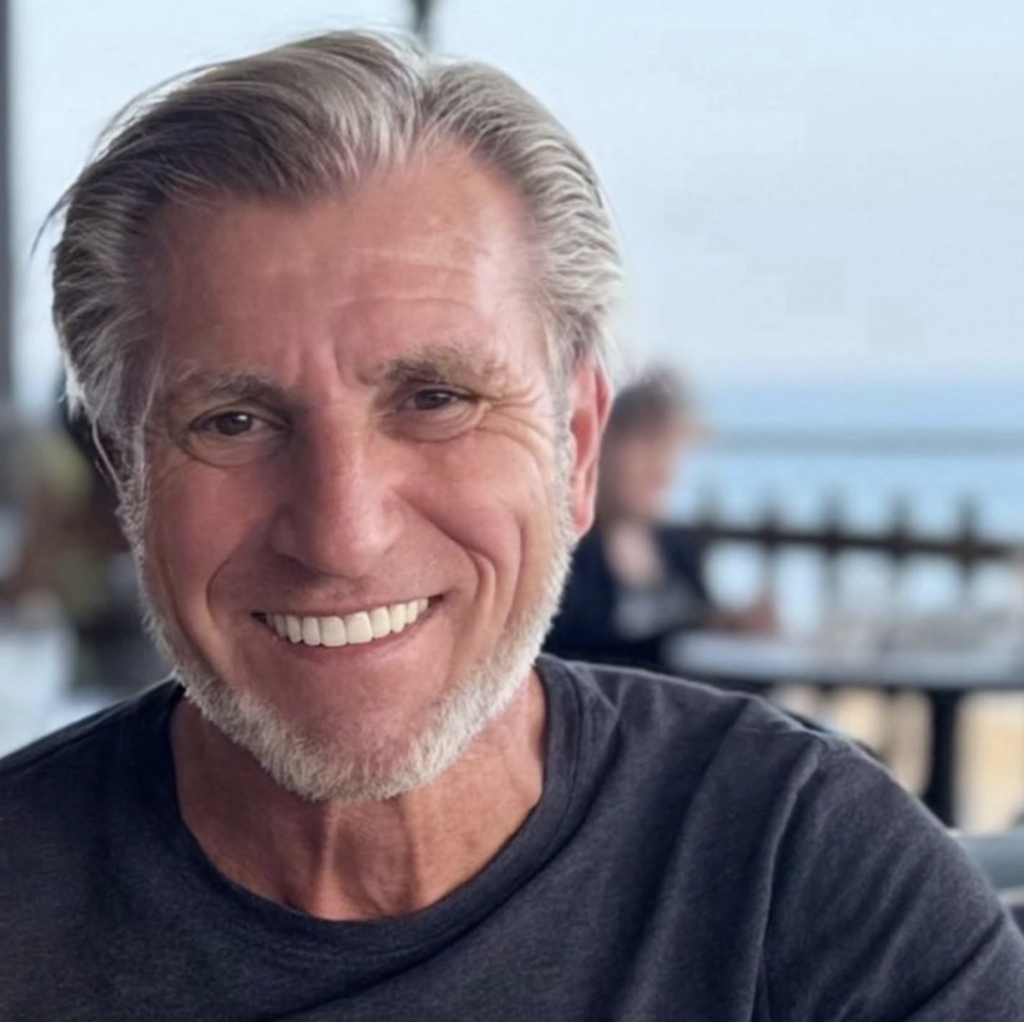
But the crazy part? Miami actually has a real-life version of that guy. His name is George Wallner.
I met George around 2004. Somewhere in that era of Miami when everyone was still using BlackBerrys and Lincoln Road had more artists than influencers. I don’t even remember where exactly. We met at a dinner party, the kind only Miami could host: loud music, louder outfits, and a room full of thousand-dollar millionaires, all tan, broke, and bragging about their latest “real estate deal.” But George wasn’t like the others. He was quiet, calm, almost monotone, but when he spoke, people leaned in.
A few months later, we started talking more, and that’s when I realized I wasn’t just dealing with another Miami “tech guy.” George wasn’t building apps. He was literally building the machines that made money move.
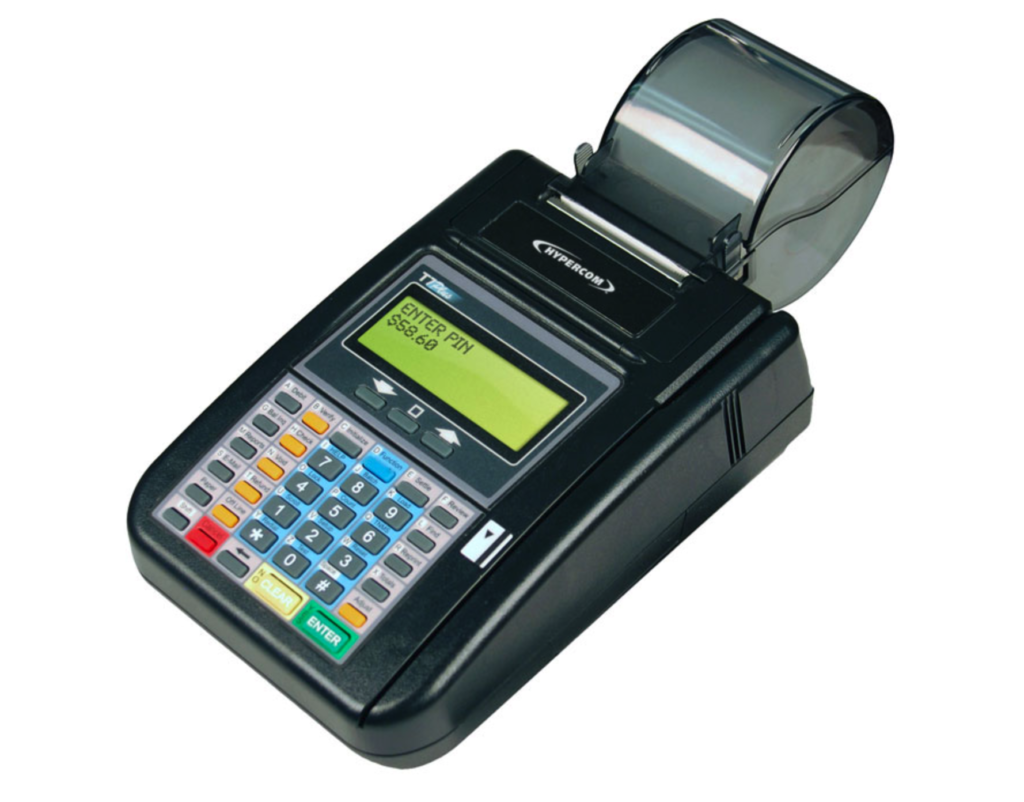
The Man Who Invented the Credit Card Machine
George founded a company called Hypercom back in the late 1970s in Australia, long before Miami knew what a startup was. He worked on a self-contained “point of sale” (POS) system for retail stores.
At the time, every system had external printers and big vacuum fluorescent displays. Nobody could make an integrated printer reliable enough. His model, the T7, changed everything. It was the first to integrate the printer, card reader, and LCD display all in one unit, something considered impossible at the time. He even had a patent on it.
When people ask what he does, I tell them, “He invented the credit card machine.” They usually laugh, like I’m making some Miami-style exaggeration, the way Dr. Evil once bragged his “father would make outrageous claims like he invented the question mark.” Yet for once, in Miami, that isn’t the usual overblown vernacular designed to impress.
He moved to Miami sometime in the 1990s after relocating Hypercom to Phoenix. By the time I met him, he was already out of that game, semi-retired, and somehow busier than anyone I knew.
When you think about how important the T7 was to retail stores around the world, then you understand there are simply fewer people who’ve had more of an impact on modern human consumerism than this guy.
How to Defect Like a Legend
George was born in Hungary, studied electrical engineering, and joined the Hungarian Air Force as a radio operator. The story that really captures who he is happened one night during the Vietnam War.
He was operating on the communist side but stationed in South Vietnam under official cover as a member of the ICCS (International Commission for Control and Supervision). One night, he decided he’d had enough.
He walked out of his barracks, hailed a taxi, and said, “Take me to the Australian Consulate.” The driver refused. It was almost curfew, and he’d be stuck there until morning. George calmly pulled out his gun, pointed it at the driver’s head, and said, “You’ll take me now.”
The driver started driving.
He made it across the city, but when George got there, it was Friday evening. Everyone at the consulate had gone home for the weekend. The guard told him to come back Monday. So he waited. He slept on the floor outside for three days. Monday morning, the Australians came in, debriefed him, and took him in as a defector.
That’s George’s origin story.
The Workshop of a Mad Genius
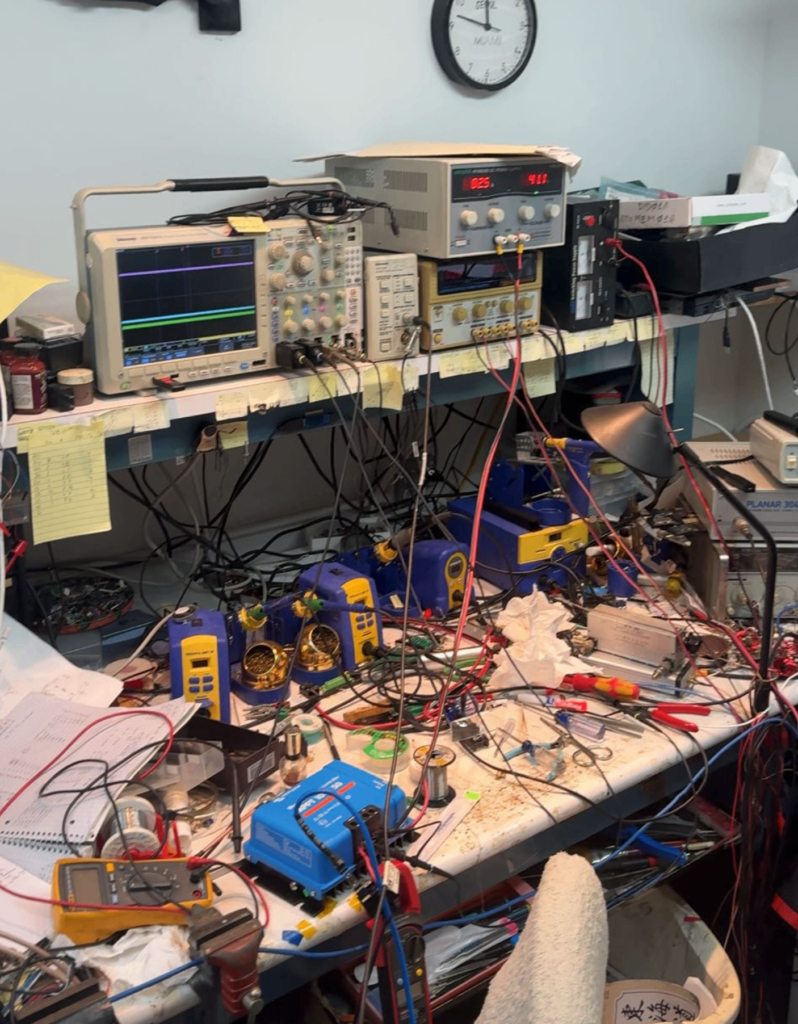
Years later, I found myself in his Hibiscus Island house, standing in a tiny back workshop that looked like the leftovers of a RadioShack explosion. It wasn’t what you’d expect from a multimillionaire. It was cluttered, chaotic, alive.
Circuits. Wires. Soldering irons. A faint smell of ozone. It looked less like a tech lab and more like a Bond villain’s garage sale—half genius, half fire hazard
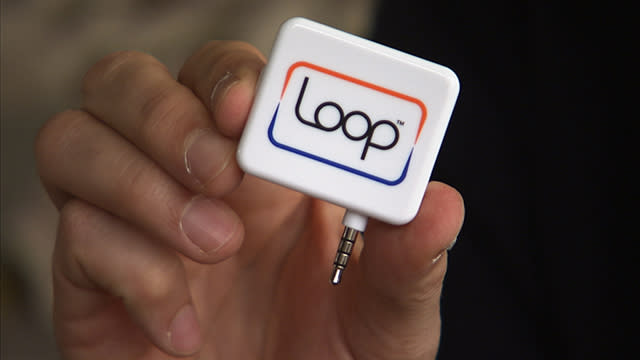
He showed me this little device that plugged into a phone.
He said, “I can send a payment from this to a credit card machine.”
I said, “Oh, that’s cool. What’s it called?”
“LoopPay,” he said. “It works everywhere.”
I said, “Like Apple Pay?”
He said, “No, much better than Apple Pay. This works everywhere.”
Then he explained that Apple Pay, at least at the time, required retailers to buy new specialized equipment at the point of sale. His new technology just worked on almost every existing terminal. No upgrades, no new hardware, just plug it in and go.
A few months later, Samsung bought LoopPay and installed the new “Samsung Pay” inside every one of their new phones. If you’ve ever used your Samsung phone to tap and pay, you’ve used George’s invention.
Point Nemo
About a year ago, I got a WhatsApp message from George. It just said, “At Point Nemo.”
If you don’t know what Point Nemo is, it’s the point on Earth farthest from civilization, literally the middle of nowhere in the South Pacific. The nearest humans are often astronauts on the International Space Station.
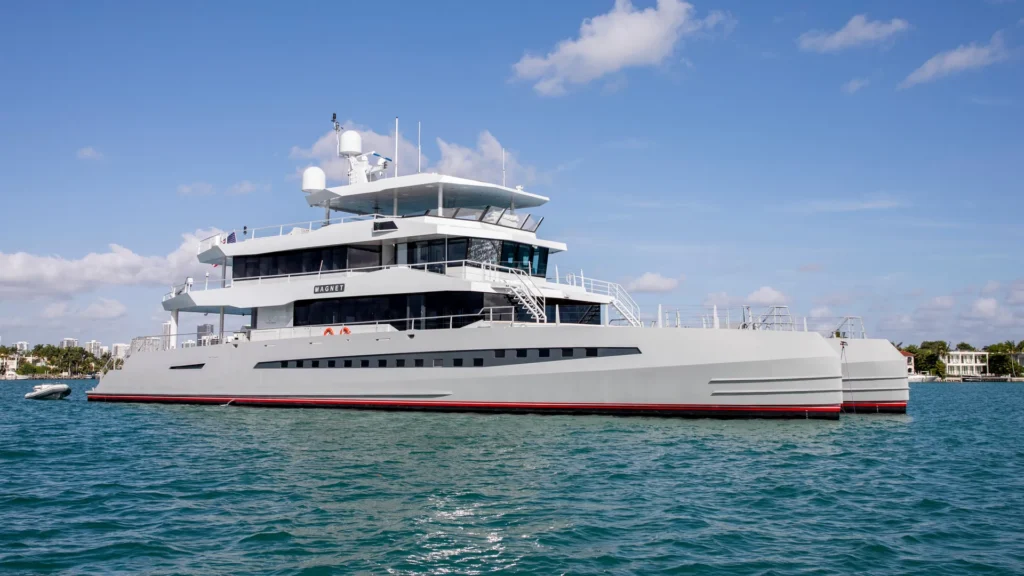
George was there, texting me from Starlink, aboard his 150-foot expedition catamaran called Magnet, which he had built himself. Not bought, built.
You’ve likely seen it towering above Hibiscus Island from the MacArthur Causeway. Magnet isn’t your typical Miami yacht. It looks more like a military ship that decided it was tired of taking orders, or a spacecraft preparing to fend off an alien invasion. It’s built to survive anything, go anywhere, and run so efficiently it can travel from Miami to Europe and back, then back to Europe again, on a single tank of fuel.
The reason he built it wasn’t luxury. He built it to reach the most remote corners of the planet, set up small radio towers called RIBs (Radio-in-a-Box units), and connect with other ham radio operators across the world.
In the world of amateur radio, that’s called a DXpedition, an expedition to the farthest, most inaccessible spots on Earth just so you can say, “Yep, I made contact from there.” George would sometimes stay for weeks with a small crew, running radio operations from the boat and verifying contacts from ham radio hobbyists all over the globe.
That’s what he does for fun.
The Bomb in the Backyard
One day while out on a diving expedition in the Bahamas, George came back with an unexploded World War II bomb. Yes, a bomb. It’s true. In fact, he still has it at his house. It was corroded and completely destroyed, having been underwater since the war.
And before you ask, no, it isn’t armed and it has no explosives.
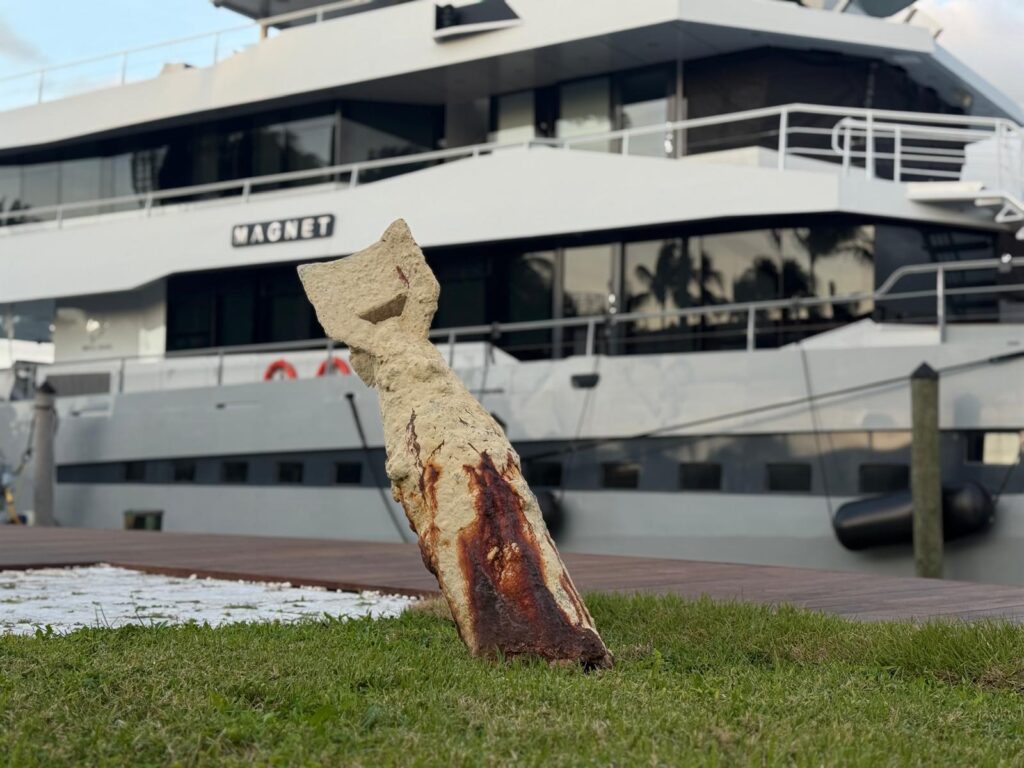
So what did he do with it? Exactly what any genius adventurer, diver, engineer, inventor would do. He embedded it into his backyard to make it look like it had just fallen from the sky. Now it sits there, half-buried, this perfectly absurd art piece that somehow fits right in with the rest of George’s life.
And just when you think that’s peak George, you find out his wine cellar is sealed with a real watertight door from a cargo ship, a massive hulking piece of metal protecting dozens of cases of champagne and wine from the elements, and apparently any icebergs.
The Wedding
Over the years, George and I became good friends. In 2012, after I proposed to my amazing wife Hilda on the Groove Cruise, we started planning the wedding. We wanted a party, not a production, everyone in white, no sit-down dinner, no assigned seating, just a beautiful, wild celebration with a quick ceremony at the beginning.

George offered his house. Didn’t hesitate. Just said, “Take it.”
His home is practically built for parties. Wide, open, right on the water, built to breathe and to hold laughter. He loves having people around. He’s not the loudest, not the center of attention, but he’s always smiling, always quietly enjoying himself.
That night was one of the best of my life, and his generosity made it possible.
Magnet Defense
Today, George has converted Magnet into a research and development vessel to test software for his latest venture, Magnet Defense. The company is focused on developing large, automated robotic boats for national defense
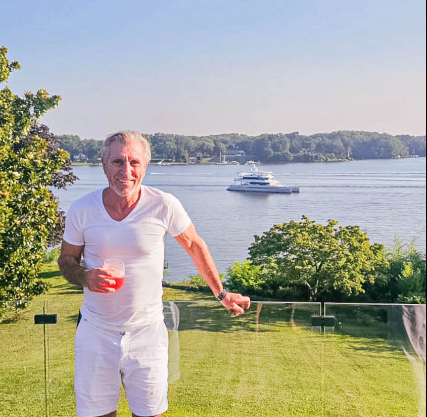
It’s the perfect next chapter for a man who’s spent his life merging invention, adventure, and purpose.
His name is George
Miami is a city obsessed with appearances, cars, clothes, and who’s on the guest list. George doesn’t fit any of that. He’s as comfortable spending weeks on a Brazilian trawler loaded with radio gear as he is sipping rosé in Brickell.
He’s a freediver, an engineer, a builder, and a quiet adventurer who sees problems as puzzles to play with. While most people collect things, George collects experiences.
He’s proof that you can build global tech companies, defect from a communist country, sail to the ends of the Earth, and still choose curiosity over comfort.
So next time someone tells you about the Dos Equis guy, just tell them, “Meh, wait until you meet George.”